Netherlands: Language Between Canals, Windmills, and Caribbean Shores
The Netherlands is linguistically diverse, stretching from European cities to Caribbean islands. Beyond Dutch, travelers encounter Frisian in Friesland, regional Dutch dialects, migration languages in urban centers, and Papiamento, English, and Spanish in the Caribbean territories. From Amsterdam’s canals to Aruba’s beaches or Curaçao’s vibrant markets, language reflects local culture, identity, and history, offering travelers a rich palette for listening, learning, and engagement.
DESTINATIONSEUROPE
4 min read
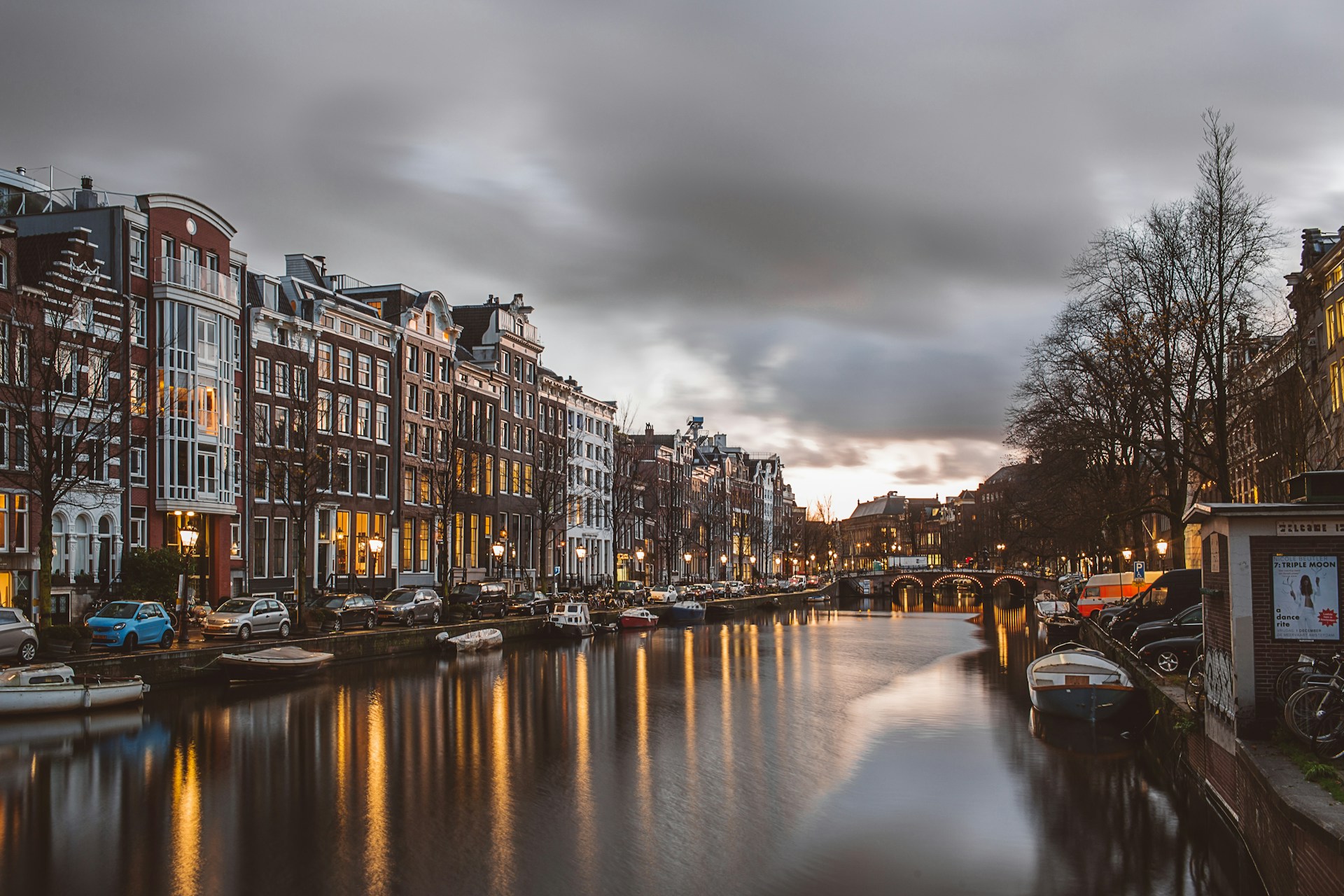
The Kingdom of the Netherlands includes:
European Netherlands – Amsterdam, Rotterdam, Utrecht, Friesland, Limburg, Zeeland, etc.
Caribbean Netherlands (special municipalities): Bonaire, Sint Eustatius, Saba
Autonomous Caribbean Countries: Aruba, Curaçao, Sint Maarten
Dutch is official throughout the Kingdom, but regional languages and creoles shape local life, especially in the Caribbean territories.
🔥 Fact Flash 🔥
Dutch: The Heart of Public Life
Dutch dominates public life, education, media, and official communication in the European Netherlands. It is marked by soft consonants, diphthongs, and a fluid rhythm. Travelers quickly notice differences between city accents (Amsterdam vs Rotterdam) and rural pronunciations (Zeeland, Limburg). Knowing key phrases makes ordering food, buying tickets, or navigating museums easier.


Both Dutch and English are West Germanic languages. If you ignore the French influence in English, they are remarkably similar.
📝 Language Fact 📝
Frisian: Voices of the North
Frisian is spoken in Friesland by roughly 400,000 people. Recognized as an official regional language, it appears on signs, in schools, and media. Its similarity to English makes it fascinating for travelers and linguists alike. Folk festivals, poetry readings, and local radio allow immersive exposure to Frisian.


Frisian maintains strong cultural identity in northern villages, with literature and songs actively preserving the language.
🌿 Indigenous Insight 🌿
Regional Dutch Dialects
Dutch dialects like Limburgish, Brabantian, and Zeelandic appear across provinces. Each slightly varies in vocabulary, pronunciation, and rhythm. While mutually intelligible with Standard Dutch, these dialects provide a distinct regional “flavor.”


There are over 20 recognized Dutch dialects, many celebrated in local theatre and media.
🎧 Dialect Insight 🎧
Papiamento: A Caribbean Language (Aruba, Curaçao, Bonaire)
Papiamento, a Portuguese-Spanish creole with Dutch influence, is spoken widely in Aruba, Curaçao, and Bonaire. Travelers will hear it in daily interactions, markets, music, and signage. It is an official language alongside Dutch, reflecting centuries of Caribbean history.


English and Spanish (Caribbean Netherlands)
English is widely understood in Sint Maarten, Saba, and Sint Eustatius, while Spanish is common among communities with ties to Venezuela and other islands. Visitors will notice multilingual communication in shops, schools, and tourism services.


In Caribbean territories, a single conversation may include Dutch, English, Spanish, and Papiamento, creating a vibrant, multilingual atmosphere.
🗺️ Territorial Tip 🗺️
Languages of Migration
In European urban centers like Amsterdam, Rotterdam, and The Hague, you’ll hear Turkish, Arabic, Tamazight, Indonesian, Surinamese, and English. These languages shape neighborhoods, schools, and multicultural markets.


About 22% of the population in the Netherlands has a migration background, enriching the modern linguistic soundscape.
🌍 Urban Layer 🌍
The Netherlands is a country where picturesque canals, windmills, tulip fields, and vibrant cities meet a fascinating linguistic landscape. Beyond Dutch, travelers can hear Frisian in the north, regional Dutch dialects, and a modern mosaic of migration languages in cities. Venture further, and the Caribbean territories—Aruba, Curaçao, Bonaire, Sint Maarten, Saba, and Sint Eustatius—introduce Papiamento, English, and Spanish into the mix. Each region offers a unique opportunity to listen, learn, and immerse yourself in culture, history, and everyday life.
Lingo Traveler Toolkit:
1) Start with greetings (Beginner)
Use Hallo, Goedemorgen, Dank je, Alstublieft in cafés, shops, and trams
Material & experience: pocket phrasebook or offline app; practice with staff
2) Tune your ear (Beginner)
Focus on Dutch vowels, diphthongs, and intonation while exploring streets and markets
Material & experience: listen to local radio or podcasts; mimic phrases aloud
3) Map words to surroundings (Beginner)
Observe the vocabulary used in canals, windmills, pastries, or museum exhibits
Material & experience: create a photo glossary or notebook for reinforcement
4) Functional phrases (Intermediate)
Order food, buy tickets, ask directions, or shop confidently
Material & experience: roleplay short exchanges with companions or locals
5) Regional exploration (Intermediate)
Hear Frisian in Friesland, Limburgish in the south, Zeelandic along the coast
Material & experience: visit small towns, attend folk festivals, and compare signage with standard Dutch
6) Shadow and repeat (Intermediate)
Repeat phrases from museum guides, city tours, or audio recordings
Material & experience: use podcasts or guided tour apps; practice aloud while walking or cycling
7) Engage in culture (Advanced)
Attend poetry readings, theatre, folk festivals, and storytelling events
Material & experience: note idioms, phrases, and lyrics; participate in guided sessions
8) Caribbean language immersion (Advanced)
In Aruba, Curaçao, Bonaire, Sint Maarten, Saba, or Sint Eustatius, explore Papiamento, English, Dutch, and Spanish
Material & experience: visit markets, cultural centers, and tourist hubs; try simple phrases with locals
9) Observe multilingual urban life (Advanced)
Attend events and meetups using Turkish, Arabic, Tamazight, Indonesian, and Surinamese in European cities
Material & experience: explore multicultural neighborhoods, restaurants, and universities
10) Reflect and converse (Advanced)
Keep a journal, practice short dialogues, and explore idioms in context
Material & experience: attend informal meetups, cafés, or cultural centers to test skills


Language Tips for Lingo Travelers in Netherlands
Discover The World & Learn Languages.
Created with ❤️ by Lingo Trail.
This website may contain affiliate links, which may earn a commission at no extra cost to you if purchases are made through them.
hello@golingo.com
+1-555-789-4321
© 2026 Lingo Trail. All rights reserved. No part of this website may be reproduced or transmitted in any form without prior written permission from Lingo Trail.